
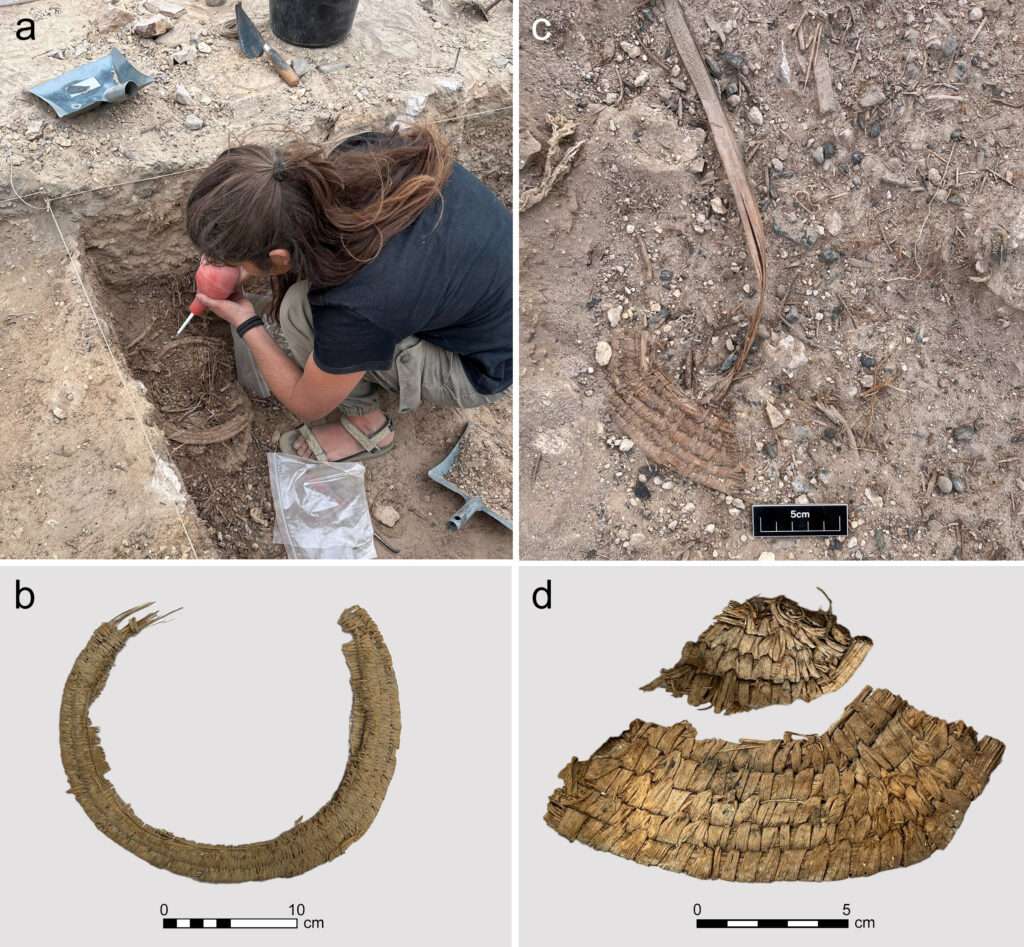
Researchers from the University of Haifa are presenting for the first time in the Silk Road Virtual Museum unique findings dating back over a thousand years. Items include fabrics from India, wool from the deserts of Central Asia, and silk from China, all uncovered during archaeological excavations in the Arava *
A new exhibition staged by the University of Haifa opened this past weekend in the Silk Road Virtual Museum, an international initiative that brings together dozens of exhibitions and heritage sites along the historical Silk Roads of Central Asia. This is the first time that an Israeli exhibition has participated in the international platform.
The exhibition presents rare findings dating back over a thousand years, including dyed cotton fabrics, felt and silk textiles. The items were preserved in exceptional conditions at the Nahal Omer site in the Arava region of southern Israel, along the ancient Spice Route. The findings reflect the commercial and cultural ties and the flow of merchandise and ideas between our region and India, China, Iran, the Arabian Peninsula, and Central Asia.
The exhibition was curated by Prof. Guy Bar-oz, Prof. Gideon Avni, and research student Nofar Shamir-Shafir of the Department of Cultural Heritage in the School of Archaeology and Maritime Cultures at the University of Haifa.
Items on virtual display include decorated cotton fabrics from India and Bukhara in Central Asia; felt strips made from Bactrian camel wool from the deserts of Central Asia; and silk fragments originating in China. Thanks to the arid climate in the Arava, the fabrics were preserved in exceptional condition and are regarded as rarities in the archaeological world.
The researchers explain that the findings strengthen the recognition that the Negev and Arava regions of Israel formed part of an important trade route within the ancient Silk Road network that connected Eastern Asia, Central Asia, and the Arabian Peninsula to the Mediterranean. The exhibition reflects growing international academic recognition of the importance of the Israeli silk road as one component of the ancient network of trade routes that crossed the Arava and the Negev.
“In addition to its archaeological importance, the exhibition also offers a contemporary perspective on regional contacts and intercultural exchange. It emphasizes that over a thousand years ago, extensive trade and exchanges of knowledge took place between the Middle East, Central Asia, and East Asia. This reminds us that even in ancient times, the region was already part of a broad international network of cultural and economic ties,” Prof. Bar-Oz commented.