
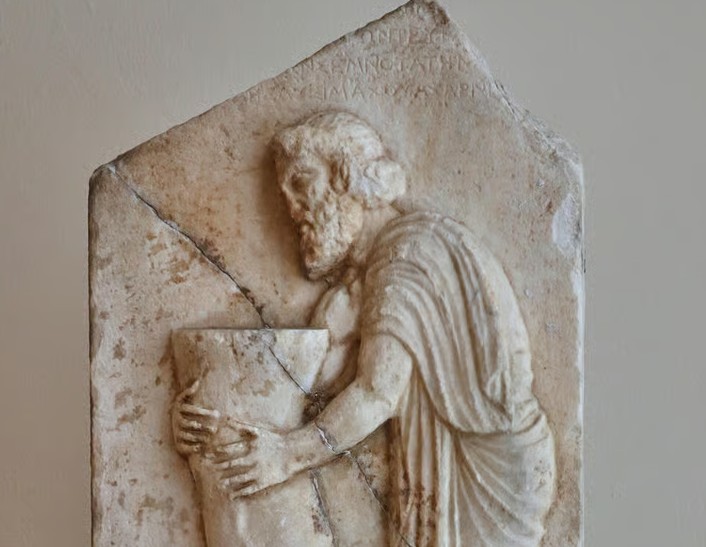
*A new study at the University of Haifa, based on 10,800 ancient Greek inscriptions, found that the frequency with which vows were mentioned was determined in part by the identity of the deity. Vows were mentioned more frequently in dedications to Artemis, goddess of the hunt, and less often in dedications to Athena, goddess of wisdom, and to Roman emperors.
Promises made by worshippers to the gods were increasingly documented in antiquity, according to a new study conducted at the University of Haifa and published in PLOS ONE. Inscriptions accompanying gifts to the gods increasingly specified that the worshipper had given the gift in fulfillment of a vow—that is, a promise previously made to a deity. The proportion of inscriptions mentioning a vow rose from just under nine percent in the sixth century BCE to more than sixty percent in the fifth and sixth centuries CE, when most of the inscriptions were Christian. “The increase in the mention of vows may suggest that worshippers attached growing importance to presenting a gift as part of an ongoing relationship with the deity. They commemorated both the promise that preceded the gift and its fulfillment. However, the inscriptions do not allow us to determine whether people made vows more frequently or whether it was the way they recorded their vows that changed,” said Professor Moshe Blidstein of the University of Haifa, who led the study.
Giving gifts to the gods was a widespread practice in the ancient world among pagans, Jews, and Christians alike. Gifts included altars, lamps, and figurines, and the accompanying inscriptions sometimes stated that they had been given in fulfillment of a previous promise to a deity. Some gifts were offered to realize vows made in connection with a request for recovery from illness, a successful journey, or the safety of one’s family. Vows were also made in the absence of any specific crisis, as part of a supplication for health and prosperity. In the present study, Professor Blidstein, head of the Department of General History at the University of Haifa, sought to examine how the recording of vows changed over time, how it varied across regions, and which characteristics of dedications were associated with the mention of vows.
The study analyzed 10,795 Greek dedicatory inscriptions dating from the sixth century BCE to the seventh century CE. The inscriptions were located in a digital database containing more than 217,000 Greek inscriptions. The researcher identified references to vows, the names and epithets of deities, the reasons for the dedications, and details about the dedicants. He then compared the proportion of inscriptions mentioning vows among all dedicatory inscriptions in each period and region. He also examined whether the association between the identity of the deity and the mention of a vow remained after taking into account the period and region from which the inscription originated. The analysis allowed for uncertainty in dating, since many inscriptions can be dated only to a range of years rather than a specific year.
The findings show that vows were mentioned in inscriptions accompanying gifts to the gods more frequently in Asia Minor, which encompasses most of present-day Turkey, as well as in Syria and the Land of Israel, than in most of Greece and the Aegean islands. In other words, the mention of vows was characteristic of regions where Greek culture came into contact with other cultures, such as those of the Jews and Phoenicians, who gradually adopted Greek as a spoken and written language. This suggests that the practice of making vows and recording them, although present in Greece, was more characteristic of these peoples. Alongside the geographical differences, the study also found differences according to the identity of the deity to whom the gift was dedicated. A vow was mentioned in nearly 58 percent of inscriptions containing the divine epithet Hypsistos, meaning “Most High,” compared with approximately six percent of inscriptions dedicated to Athena, the goddess of wisdom in Greek mythology. Vows were mentioned more frequently in inscriptions accompanying gifts to Artemis, the goddess of the hunt in Greek mythology, and less frequently in those dedicated to the Roman emperors. However, the increase in the recording of vows over time does not necessarily prove that people made more vows; they may instead have become more inclined to mention their vows in inscriptions.
“These differences suggest that mentioning a vow was not simply a matter of personal preference. It was also associated with local tradition and the identity of the deity to whom the worshipper appealed. A promise and its fulfillment may have been regarded as a more appropriate way of approaching certain deities than others. The inscriptions thus allow us to see how local culture was integrated into the personal relationship with the deity. The rising trend in inscribed vows, even before the rist of Christianity, also shows that religious change preceded the Christianization of the Roman Empire,” Professor Blidstein concluded.