
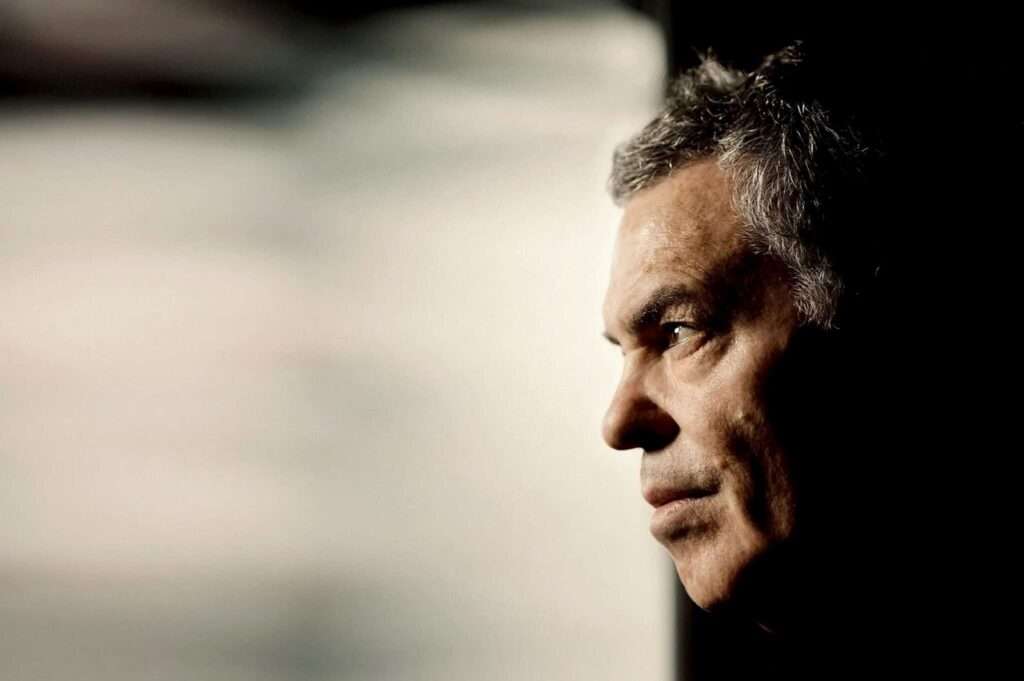
The degree will be awarded to Gitai in recognition of his outstanding contribution to Israeli and international cinema, the development of a distinctive cinematic aesthetics, his courageous engagement with complex social and political issues, and his deep connection to his hometown of Haifa.
On October 11, 2026, the University of Haifa will confer an Honorary Doctor of Philosophy, honoris causa, upon Amos Gitai, a Haifa native and one of Israel’s most internationally acclaimed filmmakers. The degree recognizes his contribution to Israeli and world cinema, his development of a cinematic language that pushes the boundaries of the medium, and his sustained engagement with issues at the heart of Israeli society, including war, the Israeli-Arab conflict, identity, religion, migration, displacement, and the refugee experience. The University will also honor Gitai’s deep connection to Haifa, a city that occupies a prominent place in his work and serves as a lens through which to explore Jewish–Arab relations and the questions of identity, memory and coexistence.
“Throughout his career, Gitai has used film to explore memory, identity and the complexities of Israeli society. Returning to the same places and communities across different periods, he reveals how individual lives become part of a larger collective story. His films make room for different voices and perspectives, creating space for dialogue without simplifying disagreement or difference.
That commitment to engaging with complexity resonates deeply at the University of Haifa, where academic excellence goes hand in hand with bringing people, ideas and communities together. It is a principle reflected in our research, our diverse campus and our commitment to building a shared society,” said University of Haifa President Prof. Gur Alroey.
Amos Gitai was born in Haifa in 1950, the son of Bauhaus architect Munio Gitai Weinraub and Zionist activist Efratia Munchek-Margalit. He studied architecture at the Technion and continued to doctoral studies in architecture at the University of California, Berkeley. After being wounded during the Yom Kippur War, he left his architectural studies and turned to filmmaking. He began his career directing television reports and, in 1980, made his first feature-length documentary, House. After Israeli television decided not to broadcast the film because of its political content, Gitai screened it at festivals across Europe.
In the years that followed, he continued to make documentary films in Israel and around the world, including Wadi 1981-1991, Field Diary, Bangkok-Bahrain, and Ananas. In 1986, he directed his first fiction film, Esther, and throughout his career has continued to work in both fiction and documentary cinema. His notable films include Berlin-Jerusalem, Devarim, Kadosh, Kippur, Kedma, Alila, Promised Land, Free Zone, and Rabin, the Last Day. His films have competed in the official selections of the world’s leading film festivals, including the Cannes and Venice Film Festivals.
Throughout his career, Gitai has received numerous awards, honorary degrees and decorations from countries and cultural institutions around the world.