
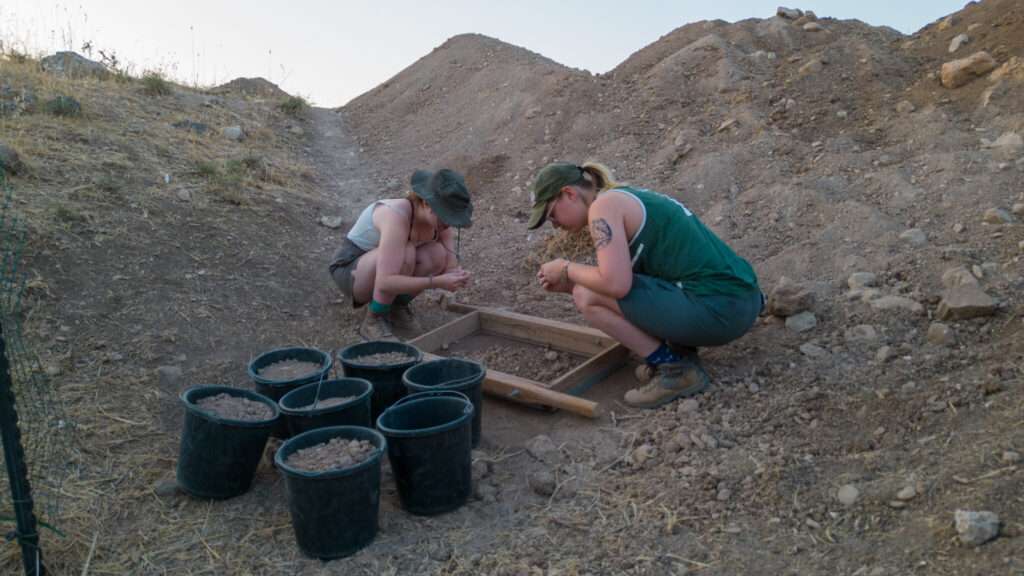
A surprising finding from the excavations at Tel Hazor reveals that even during military conflicts between the Kingdom of Israel and the Kingdom of Aram in the tenth-eighth centuries BCE, shepherds and farmers continued to move freely in open pasturelands – despite the political borders
A new study from the University of Haifa published in the scientific journal PLOS ONE has uncovered a fascinating historical insight. Even during periods of military conflicts and changes in the borders established between the Kingdom of Israel and the Kingdom of Aram during Iron Age II, from the tenth to eighth century BCE, the daily lives of shepherds and farmers in the region continued almost uninterrupted. The research was conducted at the site of Tel Hazor located in the Hula Valley, which served as a direct meeting point between the two kingdoms and reveals that the political borders were not perceived as an impassable barrier, but rather remained permeable and flexible. “Our findings show that the movement of herds was not restricted even during periods of high military tension. The data challenge previous assumptions about ancient borders and show that they were permeable and local in nature, allowing ordinary people to continue their daily routines,” said Prof. Cheryl Makarewicz, from the University of Haifa, one of the scholars who conducted the research.
During the tenth to eighth centuries BCE, society in the southern Levant underwent major political and social changes. Territorial kingdoms, such as the Kingdom of Israel and the Kingdom of Aram-Damascus, were established and fought each other for regional control, building governing institutions and fortifying borders. Many studies have examined the political organization, cultic activities, and conflicts between ruling elites in this period, but the direct impact of the confrontations and borderlines on people’s daily lives remained unknown. In the current study, Prof. Cheryl Makarewicz, Dr. Shlomit Bechar, and Prof. Nimrod Marom, from the School of Archaeology and Maritime Cultures at the University of Haifa, and doctoral candidate Sarah Martini from Yale University, sought to examine whether the borderlines between the kingdoms restricted the movement of shepherds and access to pasturelands, which were the economic basis for the existence of rural communities and support for the government.
To assess how borders and conflicts influenced herding patterns, the scholars used advanced analytical methods that allow for the identification of grazing patterns and seasonal animal movements. They collected and analyzed teeth from herds, mainly sheep and goats, found in the Hebrew University excavations at Tel Hazor in the Hula Valley, an area that served as a flashpoint of friction between the Kingdom of Israel and the Kingdom of Aram. By analyzing stable isotopes in the teeth of goats and sheep, including measurements of strontium, oxygen, and carbon, the scholars were able to reconstruct the locations where the herds grazed throughout the year. The method allowed them to identify whether the animals were restricted to pasturelands near the settlement or also migrated to more distant areas, such as the Golan Heights, and thereby understand the permeability of political borders and their impact on the daily lives of rural communities.
The results of the study indicate that the movement of shepherds and their herds was not restricted, even during periods of military tension between the Kingdom of Israel and the Kingdom of Aram. The data showed that the animals grazed both in the fields and pasturelands close to Tel Hazor and in more distant areas, including the Golan Heights region, which at the time was a flashpoint between the kingdoms. According to the findings, the pasturelands remained open and accessible, and economic life in the border areas continued almost without interruption. “The surprising result is that despite the wars and struggles between the elites, the shepherds and farmers in the field managed to continue migrating with their herds and maintain almost normal daily lives. This indicates local agreements, connections between communities, and collaborations that are not always evident in historical sources, but that allowed ordinary people to make a living even as the political border changed around them,” concluded Dr. Bechar, who also directs an excavation at Hazar.
The researchers believe that the study’s findings provide a new perspective on how ancient borders actually functioned, and may also shed light on how borders function in rural areas today.